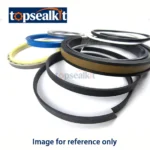

When you order a hydraulic seal kit for your excavator, you will encounter three primary seal materials: Polyurethane (PU), Nitrile Rubber (NBR), and Viton/FKM (Fluorocarbon). Each material has distinct properties that make it suitable for different operating conditions.
Choosing the wrong seal material is one of the most common causes of premature seal failure. This detailed comparison helps you select the right material for your specific application — every time.
Understanding Seal Material Basics
Hydraulic seal materials are selected based on four key properties:
- Temperature resistance: The operating temperature range the material can withstand without degrading
- Chemical compatibility: Resistance to the specific hydraulic fluid used in the system
- Mechanical properties: Tensile strength, abrasion resistance, and compression set resistance
- Cost: Material cost and processing cost
Our excavator seal kits are available in all three primary materials, with each kit using the optimal material for its specific application.
Polyurethane (PU): The Excavator Workhorse
What it is: Polyurethane is a synthetic polymer with exceptional mechanical properties. It is the most widely used material for excavator rod seals and wiper seals worldwide — for good reason.
Temperature range: -30C to +100C (standard grades), up to +120C (premium grades)
Key advantages:
- Outstanding abrasion resistance: PU outlasts rubber by 3-5x in dusty, dirty environments typical of excavation work
- High load-bearing capacity: Can handle higher pressures than many rubber compounds
- Excellent extrusion resistance: Resists being squeezed into gaps under high pressure
- Good memory properties: Returns to original shape after compression cycles
- Wide availability: Most common material for aftermarket excavator seals
Limitations:
- Limited temperature range: Not suitable for environments above 100-120C
- Hydrolysis sensitivity: Can degrade in presence of water at high temperatures (ester-based fluids at 80C+)
- Not suitable for phosphate ester fluids: Chemical incompatibility with some synthetic hydraulic fluids
Best applications: Standard construction excavation, mining, demolition, and earthmoving. PU is the default choice for most excavator applications unless specific conditions require an alternative material.
Nitrile Rubber (NBR): The Cost-Effective Standard
What it is: Nitrile Rubber (also called Buna-N or NBR) is the most widely used elastomer in hydraulic systems. It is the standard material for O-rings, gaskets, and static seals throughout the hydraulic circuit.
Temperature range: -40C to +120C (standard grades)
Key advantages:
- Excellent petroleum oil compatibility: Outstanding resistance to petroleum-based hydraulic oils — the most common fluid type
- Cost-effective: Less expensive than PU or Viton
- Wide availability: Standard material stocked by virtually every hydraulic parts supplier
- Good mechanical properties: Reasonable abrasion resistance and tensile strength for static applications
Limitations:
- Not for high temperatures: Above 120C, NBR degrades rapidly
- Not for phosphate ester or synthetic ester fluids: Chemical incompatibility limits use with some premium hydraulic fluids
- Not for ozone or weathering: Outdoor exposure without UV protection causes rapid degradation
Best applications: O-rings and static seals throughout the hydraulic system. NBR is the right choice for gland O-rings, port seals, and any static sealing application in petroleum oil systems. For dynamic rod and piston seals in demanding conditions, PU is usually the better choice.
Viton/FKM (Fluorocarbon): The Premium Performer
What it is: Viton (DuPont’s brand name for FKM fluoroelastomer) is a premium material designed for extreme operating conditions. It offers unmatched chemical and temperature resistance.
Temperature range: -20C to +200C (standard grades), up to +250C (specialty grades)
Key advantages:
- Outstanding temperature resistance: Maintains sealing properties at temperatures that destroy most other elastomers
- Superior chemical resistance: Compatible with phosphate ester fluids, synthetic esters, and aggressive chemicals that destroy NBR and PU
- Excellent ozone and weathering resistance: Ideal for outdoor applications without UV degradation concerns
- Wide fluid compatibility: Works with most common hydraulic fluid types including some specialty fluids incompatible with NBR
Limitations:
- Higher cost: 3-5x the cost of NBR, 1.5-2x the cost of PU
- Lower abrasion resistance than PU: Not ideal for high-contamination environments without additional protection
- Limited availability: Fewer aftermarket suppliers stock Viton seal kits
Best applications: High-temperature environments (hot climates, near-forge or foundry work, desert operations), equipment using phosphate ester or specialty synthetic hydraulic fluids, and outdoor equipment exposed to extreme weather conditions. Premium excavator seal kits may specify Viton for specific high-demand applications.
Material Comparison Table
| Property | Polyurethane (PU) | NBR Rubber | Viton/FKM |
|---|---|---|---|
| Temperature Range | -30C to +100C | -40C to +120C | -20C to +200C |
| Abrasion Resistance | Excellent | Good | Fair |
| Petroleum Oil Resistance | Excellent | Excellent | Excellent |
| Phosphate Ester Resistance | Poor | Poor | Excellent |
| Water Resistance | Good | Good | Good |
| Ozone/Weathering | Fair | Poor | Excellent |
| Cost | Medium | Low | High |
| Primary Use | Rod seals, wiper seals | O-rings, static seals | High-temp applications |
Making the Final Material Decision
For the vast majority of excavator applications — standard construction, mining, demolition, and earthmoving — Polyurethane is the correct choice for dynamic rod seals and wiper seals, paired with NBR for O-rings and static seals.
The equation is simple: PU handles the demanding dynamic sealing task at a reasonable cost, NBR handles the static sealing tasks economically, and the result is reliable, long-lasting hydraulic sealing performance.
Upgrade to Viton only when your specific operating conditions genuinely require its unique properties — high temperatures, aggressive fluids, or extreme outdoor exposure. Paying Viton prices for conditions where PU would perform perfectly well is unnecessary expense.
Conclusion
Understanding the differences between Polyurethane, NBR, and Viton seal materials helps you make informed decisions about your excavator parts purchases. Match the material to your actual operating conditions, and you will get the best balance of performance, reliability, and cost.
For most excavator applications, the default choice of PU for dynamic seals and NBR for static seals delivers optimal results. Browse our complete range of excavator seal kits to find the right material specification for your equipment.
Keywords: polyurethane vs NBR vs Viton seals, excavator seal material comparison, hydraulic seal material selection, PU seal, NBR O-ring, FKM Viton seal, hydraulic seal specification