
Even the highest-quality cylinder seal kit can fail within days of installation if the installation process is not performed correctly. Professional technicians who install excavator hydraulic seals daily have seen every possible mistake — and they consistently report that installation errors cause as many seal failures as inferior parts quality.
This guide reveals the most common — and costly — seal kit installation mistakes, and how to avoid them. These insights come from real field experience, and following them will dramatically extend the service life of every cylinder you rebuild.
Mistake 1: Installing Seals on Damaged Rods
This is the most expensive mistake in hydraulic seal installation. A piston rod with scratches, pits, or chrome damage will destroy a new rod seal within 50-200 hours of operation — regardless of seal quality.
What happens: The damaged rod surface acts like sandpaper against the soft seal lip. The seal wears grooves into itself rapidly, loses its sealing ability, and fails. Operators often blame the seal kit quality when the real culprit is the damaged rod.
How to avoid it: Before installing any seals, thoroughly inspect the entire rod surface under good lighting. Run a clean finger along the rod — you will feel any scratches or pitting. Measure rod diameter at multiple points along its length with a micrometer. If the rod is damaged, it must be re-chromed, replaced, or — in some cases — the cylinder must be replaced entirely.
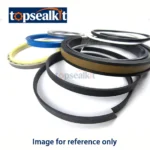
For the CAT 308D CR SB and similar models, the CAT 308D Oil Seal Kit includes precision-machined seals that require a pristine rod surface to function correctly.
Mistake 2: Using Metal Tools to Install Seals
Plastic, wood, and specialized seal installation tools are designed to protect the delicate seal lip during assembly. Metal tools — screwdrivers, picks, pliers — can cut, nick, or deform the seal lip without leaving visible damage.
What happens: A microscopically damaged seal lip will not leak immediately. But within a few pressure cycles, the damage propagates and the seal begins to weep. Technicians often cannot understand why a new seal failed so quickly — and blame the parts.
How to avoid it: Invest in a basic seal installation tool set ($30-$100). These typically include plastic drivers, sleeve protectors, and O-ring pick tools. For occasional use, a plastic socket from a hardware store, wooden dowels, and plastic wedges will work. Never use metal tools near a seal lip.
Mistake 3: Installing Seals Without Lubrication
Hydraulic seals require a thin film of clean hydraulic fluid on the sealing surfaces during installation. Dry installation causes immediate friction damage — the seal lip deforms as it slides over the rod or through the bore.
What happens: The dry seal lip bunches up, folds, or micro-cuts during installation. The damage may not be visible, but the seal lip is compromised and will leak under pressure.
How to avoid it: Apply a liberal coating of clean hydraulic fluid — the same type used in the machine — to every seal and every sealing surface before assembly. Do not use grease unless specifically approved by the seal manufacturer. Petroleum jelly (Vaseline) is acceptable for some O-ring applications but not for dynamic seals.
Mistake 4: Installing Seals in the Wrong Direction
Most hydraulic seals have a specific orientation — the lip must face the correct direction to contain pressure. Installing a seal backwards causes immediate failure.
What happens: The seal lip, designed to seal in one direction, cannot create a pressure seal when reversed. High-pressure fluid simply pushes the lip open and bypasses the seal.
How to avoid it: Always verify seal orientation before installation. Wiper seals typically have a dust lip facing outward — this must be toward the contamination source. Rod seals have a spring-loaded lip facing inward — toward the hydraulic pressure. Most seal kits include orientation diagrams. When in doubt, consult the machine service manual or contact the seal supplier.
Mistake 5: Stretching O-Rings Over Keyways or Threads
O-rings are very flexible — but they lose their sealing ability if stretched beyond approximately 3-5% of their original diameter during installation. Stretching an O-ring over a keyway, thread, or sharp edge permanently deforms the material.
What happens: The deformed O-ring does not return to its original shape when released. The cross-section becomes oval instead of round, and the seal leaks at the compressed points.
How to avoid it: Use a proper O-ring installation tool or a thin-walled plastic sleeve (cut from a bottle or tube) to protect the O-ring from damage during installation. Apply plenty of lubricant. Take your time — forcing an O-ring over a thread without protection is guaranteed to cause problems.
Mistake 6: Not Replacing Backup Rings
Backup rings are often overlooked because they look like simple plastic washers. But they play a critical role in high-pressure seal performance — without them, the O-ring or seal extrudes into the gap under pressure and fails rapidly.
What happens: Without a backup ring, the elastomer seal material squeezes into the tiny gap between the piston and the cylinder bore under high pressure. Once the material extrudes, it shears off and the seal fails. This happens quickly at pressures above 2,000 PSI — which is below the normal operating pressure of most excavator hydraulics.
How to avoid it: Every complete hydraulic cylinder seal kit includes backup rings designed for the specific pressure rating of your cylinder. Always install them, even if the old ones looked fine. Never substitute generic plastic washers — backup rings are precision-engineered components.
Mistake 7: Reusing Old Seals
When you have the cylinder apart, it is always tempting to reuse seals that look okay — especially expensive specialty seals. This is almost always a false economy.
What happens: Seals that have been in service for thousands of hours are already compressed, worn, and aged. They may appear functional but are operating at the edge of their service life. Reusing them typically results in another failure within a few hundred hours — requiring another full cylinder disassembly to fix.
How to avoid it: Replace every seal in the kit — even the ones that look fine. The cost of an extra seal in a kit is negligible compared to the labor cost of another cylinder teardown. Complete seal replacement is always the professional approach.
Mistake 8: Not Checking the Cylinder Bore
The cylinder bore is just as important as the rod. A scored, corroded, or worn bore will cause piston seal failure regardless of seal quality.
What happens: A damaged bore surface scratches and wears the piston seal during every stroke. The seal cannot maintain a seal against a rough surface, and leakage occurs.
How to avoid it: Inspect the cylinder bore visually — shine a light down the bore and look for scoring, rust, and wear patterns. Measure bore diameter at multiple points with an inside micrometer or bore gauge. Compare measurements to manufacturer specifications. If the bore is out of tolerance, the cylinder will need professional honing or sleeving before new seals will hold.
Professional Installation: The Bottom Line
Quality seal kits for excavators deliver their full performance potential only when installed correctly. The extra 30 minutes spent on proper preparation — cleaning, inspecting, measuring — saves hours of repeat repairs and hundreds of dollars in parts and labor.
Follow the old mechanic’s rule: if you do not have time to do it right the first time, when will you find time to do it over?
Conclusion
Installation mistakes cost equipment owners millions of dollars every year in premature failures, repeat repairs, and unnecessary cylinder replacements. By understanding these common mistakes and taking the time to avoid them, you will dramatically improve the service life of every hydraulic cylinder you service.
The right excavator seal kit combined with professional installation practices is the foundation of reliable hydraulic system performance.
Keywords: hydraulic seal installation mistakes, cylinder seal kit installation, excavator repair tips, seal kit installation guide, hydraulic cylinder rebuild