In the world of excavator maintenance, you often get what you pay for — especially when it comes to heavy-duty hydraulic seals. A bargain-priced seal kit might look attractive on the invoice, but when it fails in the middle of a critical project, the true cost becomes painfully apparent.
This article examines why quality matters more than price for excavators operating in harsh environments, and how to identify genuinely heavy-duty seal kits that will perform reliably under extreme conditions.
What Makes a Seal “Heavy-Duty”?
A heavy-duty hydraulic seal is designed to withstand the extreme demands of demanding applications: high pressure, high temperatures, heavy contamination, and continuous operation. Not all seals labeled “heavy-duty” actually meet these standards.
Key characteristics of genuine heavy-duty seals:
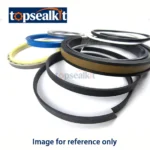
- Reinforced construction: Additional backing rings and support structures prevent extrusion under extreme pressure
- Premium polyurethane compounds: Higher-grade PU with enhanced temperature and abrasion resistance
- Precision manufacturing: Tight dimensional tolerances ensure proper fit and sealing under load
- Extended temperature ratings: Capable of operating at temperature extremes that would destroy standard seals
- Enhanced chemical resistance: Compatible with a wider range of hydraulic fluids and operating conditions
Our excavator seal kits use premium-grade materials engineered specifically for heavy-duty excavator applications.
The True Cost of Cheap Seals in Harsh Environments
Standard-seal failures in demanding applications can cost 10-20x the price difference between budget and premium seals:
- Emergency repair costs: On-site emergency service typically costs $500-$1,500 per hour for specialized hydraulic technicians
- Lost productivity: A single excavator out of service for 2-3 days during a critical project can cost $3,000-$10,000 in lost productivity
- Secondary damage: A failed seal allows contamination into the hydraulic system, damaging pumps, valves, and motors — repair costs multiply
- Fluid replacement: Contaminated hydraulic fluid requires complete system flush and replacement — $500-$2,000 in fluids alone
- Environmental costs: Hydraulic fluid spills require environmental cleanup and disposal — increasingly regulated and expensive
The math is clear: saving $50 on a budget seal kit can easily cost $2,000-$5,000 in total failure costs.
Harsh Operating Environments That Demand Heavy-Duty Seals
Mining and Quarry Operations
Mining excavators operate in some of the most demanding conditions on Earth: abrasive silica dust, extreme temperatures, high vibration, and continuous heavy loads. Standard seals in these conditions fail rapidly.
Heavy-duty seals for mining applications use reinforced PU compounds with enhanced abrasion resistance and high-temperature ratings. The CAT 308D Oil Seal Kit and equivalent heavy-duty kits for mining excavators incorporate these enhanced specifications.
Desert and Tropical Operations
Equipment operating in extreme heat faces accelerated seal aging. Standard NBR seals in desert temperatures above 45C can degrade in a matter of weeks. Heavy-duty seals with extended temperature ratings and heat-resistant compounds are essential in these environments.
Demolition and Recycling
Demolition excavators encounter extreme contamination: concrete dust, rebar, glass, and metal fragments. Wiper seals must be exceptionally robust to prevent contamination from entering the hydraulic system. Heavy-duty multi-lip wiper seal designs are essential in these applications.
Cold Climate Operations
In temperatures below -20C, standard seals can become brittle and lose their sealing ability. Heavy-duty seals using specialty PU compounds maintain flexibility and sealing performance in extreme cold — critical for mining operations in northern latitudes and high-altitude construction.
How to Identify Genuine Heavy-Duty Seals
The seal market is full of products labeled “heavy-duty” that do not meet genuine heavy-duty specifications. Here is how to separate the genuine products from the marketing:
1. Check Material Specifications
Genuine heavy-duty seals specify their material compound and rated temperature range. Look for:
- Specific PU grade: “Premium Polyurethane” or named compound grade (not just “polyurethane”)
- Temperature range: Extended range specifications like -40C to +120C (not standard -30C to +100C)
- Hardness rating: Typically 90-95 Shore A for heavy-duty PU (standard is 85-90 Shore A)
2. Verify Pressure Ratings
Heavy-duty seals should specify a maximum working pressure rating. Standard excavator seals are rated for 250-350 bar. Heavy-duty versions may be rated for 400-500 bar. If no pressure rating is specified, assume standard duty only.
3. Look for Reinforcement Features
Genuine heavy-duty rod seals include:
- Anti-extrusion rings: PTFE or filled nylon backup rings to prevent seal extrusion under high pressure
- Load rings: Spring-loaded support structures in high-pressure applications
- Multi-lip designs: Multiple sealing lips for enhanced contamination exclusion
4. Check Warranty Terms
A quality manufacturer backs heavy-duty seals with meaningful warranty coverage — typically 12-24 months. Seals sold without warranty or with 30-day “defects only” coverage are typically budget products.
5. Review Supplier Credentials
Purchase from suppliers who can provide:
- Material data sheets: Technical specifications for hardness, tensile strength, elongation, and temperature ratings
- Quality certifications: ISO 9001:2015 or equivalent quality management system certification
- Batch traceability: Ability to trace any seal to its production batch and raw material lot
- Technical support: Application engineering assistance to confirm the right seal for your conditions
The Premium Aftermarket Advantage
For heavy-duty excavator applications, premium aftermarket seals often outperform both OEM and budget aftermarket alternatives:
- Better than OEM: Premium aftermarket manufacturers often use more advanced material compounds than OEM specifications require
- Better than budget aftermarket: Rigorous quality control and material certification ensure consistent performance
- Better pricing: Even premium aftermarket seals cost 30-50% less than OEM equivalents
- Better availability: Stock the seals you need without waiting for dealer special orders
Building a Heavy-Duty Seal Inventory for Your Fleet
Fleet operators in demanding industries should maintain an inventory of heavy-duty seal kits for excavators matched to their most critical machines. Identify your highest-utilization and most demanding applications:
- Keep complete seal kit inventory for your top 3-5 most critical machines
- Match seal specifications to actual operating conditions — do not over-specify (and overpay) for conditions that do not require it
- Establish a preventive replacement schedule at 4,000-6,000 operating hours for demanding applications
- Document all failures to identify patterns and adjust inventory accordingly
Conclusion
In harsh operating environments, the price difference between budget and heavy-duty seals is trivial compared to the potential cost of equipment failure. Invest in genuine heavy-duty excavator seal kits from a quality supplier — and implement a proactive preventive maintenance schedule that replaces seals before they fail.
The total cost of ownership analysis always favors quality: a heavy-duty seal kit that lasts 6,000 hours costs far less per operating hour than a budget seal that fails at 1,500 hours — and the second failure includes expensive secondary damage from contamination.
Browse our complete range of hydraulic cylinder seal kits — engineered for the demands of real-world heavy-duty excavator operations.
Keywords: heavy-duty excavator seals, hydraulic seal quality, mining excavator seals, harsh environment seals, excavator seal failure, premium seal kits