
Compression set is one of the most important — and least understood — properties of elastomeric seals used in excavator hydraulic systems. Understanding compression set helps you choose seals that will maintain their sealing ability over thousands of operating hours.
What Is Compression Set?
Compression set is the permanent deformation that occurs when an elastomeric seal is compressed and held under load for an extended period. When you remove the compressive load, the seal does not fully return to its original thickness. This permanent deformation reduces the seal’s ability to maintain contact pressure against sealing surfaces — leading to leaks.
In excavator hydraulic systems, seals are under constant compression between sealing surfaces. Over time, compression set gradually reduces seal height and contact pressure, eventually reaching a point where leaks develop.
Premium excavator seal kits use compounds specifically formulated to minimize compression set and extend service life.
How Compression Set Is Measured
Compression set is expressed as a percentage of the original seal thickness:
- 0% compression set: Seal returns exactly to original thickness — ideal but practically unachievable
- 0-10% compression set: Excellent — seals perform reliably over long service lives
- 10-20% compression set: Good — acceptable for most applications
- 20-30% compression set: Fair — shorter service life expected
- 30%+ compression set: Poor — seal will lose sealing ability quickly
Factors That Affect Compression Set in Excavator Seals
Temperature
Temperature is the most significant factor affecting compression set. Higher temperatures accelerate the chemical degradation that causes permanent deformation:
- At 23C (room temperature): Minimal compression set over normal service periods
- At 70C: Compression set increases significantly — typical in hydraulic systems under load
- At 100C: Compression set becomes a major factor — NBR seals degrade rapidly
- At 120C+: Only FKM and specialty compounds maintain acceptable compression set resistance
Time Under Compression
Compression set increases with time. The rate of increase is highest in the first 24-72 hours of compression, then continues more slowly:
- First 24 hours: Most critical period for compression set development
- 100 hours: Majority of initial compression set occurs
- 1,000+ hours: Compression set continues but at slower rate
Material Type
Different elastomers have dramatically different compression set resistance:
- NBR (Nitrile Rubber): 15-25% compression set at 70C/70hr — standard grade; 10-15% for premium grades
- Polyurethane (PU): 8-15% compression set at 70C/70hr — excellent for dynamic seal applications
- Viton (FKM): 5-10% compression set at 70C/70hr — excellent high-temperature performance
- PTFE: 0-5% compression set — the best available, but different application requirements
Degree of Compression
Higher compression percentages cause more compression set. Seal design specifications include an optimal compression range:
- Too little compression (5-10%): May result in leaks at low pressure
- Optimal compression (15-25%): Best balance of sealing and compression set resistance
- Too much compression (30%+): Accelerates compression set and may damage seal during installation
The Impact of Compression Set on Excavator Hydraulic Performance
Progressive Seal Leak Development
Compression set causes a predictable leak development pattern:
- New seal installed: Full contact pressure, no leaks
- 500-1,000 hours: Minor compression set begins — still no leaks
- 2,000-3,000 hours: Noticeable compression set — occasional seepage may appear
- 4,000-5,000 hours: Significant compression set — regular leaks develop
- 6,000+ hours: Severe compression set — persistent leakage requires seal replacement
Why Some Seals Leak Before Others
Different cylinders on the same excavator may develop leaks at different times due to:
- Temperature variation: Boom cylinders may run hotter than arm cylinders
- Compression variation: Slightly different gland designs cause different compression percentages
- Operating pressure: Different work cycles stress seals differently
How to Minimize Compression Set in Excavator Seals
Select Low-Compression-Set Materials
For excavator applications, material choice directly affects compression set performance:
- Choose premium PU compounds: Modern PU formulations achieve 8-12% compression set vs. 15-20% for standard grades
- Specify FKM for high-temperature areas: Viton/FKM maintains sealing ability where NBR fails
- Use PTFE backup rings: PTFE is virtually immune to compression set
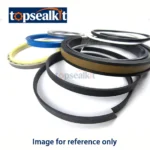
The CAT 308D CR SB Oil Seal Kit uses premium PU compounds with enhanced compression set resistance for extended excavator service life.
Design Considerations
Proper seal groove design minimizes compression set:
- Correct groove depth: Provides optimal seal compression without over-compression
- Appropriate gland spacing: Allows thermal expansion without excessive preload
- Proper seal support: Full-face support prevents uneven compression
Operating Practices
Operating practices affect compression set rates:
- Reduce peak temperatures: Hydraulic system temperatures above 80C dramatically accelerate compression set
- Regular operation: Seals under continuous static compression develop more compression set than those under dynamic cycling
- Prevent overheating: Investigate and address any causes of elevated hydraulic temperatures
Testing Compression Set Resistance
Quality seal manufacturers test compression set according to international standards:
- ASTM D395 Method B: Compress seal to 25% at specified temperature for 70-168 hours, measure permanent set after release
- ISO 815-1: International standard for compression set testing
Request compression set test data from your seal supplier. Reputable suppliers provide batch test certificates showing compression set performance at operating temperatures.
Compression Set vs. Other Seal Failure Modes
Compression set is one of several factors affecting seal life. Understanding the relationship helps prioritize maintenance:
- Compression set: Primary failure mode for static seals and O-rings
- Abrasion wear: Primary failure mode for dynamic rod seals in contaminated environments
- Extrusion: Primary failure mode for seals in high-pressure applications without adequate backup rings
- Chemical degradation: Primary failure mode in incompatible fluid or high-temperature applications
Conclusion
Compression set is an inherent property of elastomeric seals that determines how long they maintain their sealing ability under load. Understanding compression set helps you select seals with the right material specifications for your excavator operating conditions.
For most excavator applications, premium PU seals with 8-12% compression set resistance offer the best combination of dynamic sealing performance and long service life. In high-temperature applications, FKM seals with 5-10% compression set provide reliable performance where NBR would fail prematurely.
Quality hydraulic cylinder seal kits are manufactured from compounds specifically formulated for low compression set. Verify compression set test data when selecting seal kits for demanding applications.
Browse our complete range of excavator parts with full material specifications including compression set data.
Keywords: compression set oil seal, hydraulic seal deformation, excavator seal failure, elastomer compression set, seal material performance