When selecting oil seals for excavator hydraulic systems, understanding durometer hardness ratings is essential for choosing components that will perform reliably in demanding conditions. The hardness of a seal material directly affects its wear resistance, sealing ability, and service life.
What Is Durometer Hardness?
Durometer measures the resistance of elastomeric materials to indentation. For hydraulic seals, this directly correlates to how well the seal material can resist wear while maintaining its shape under pressure. Higher durometer ratings mean a harder material that resists compression set but may not conform as easily to sealing surfaces.
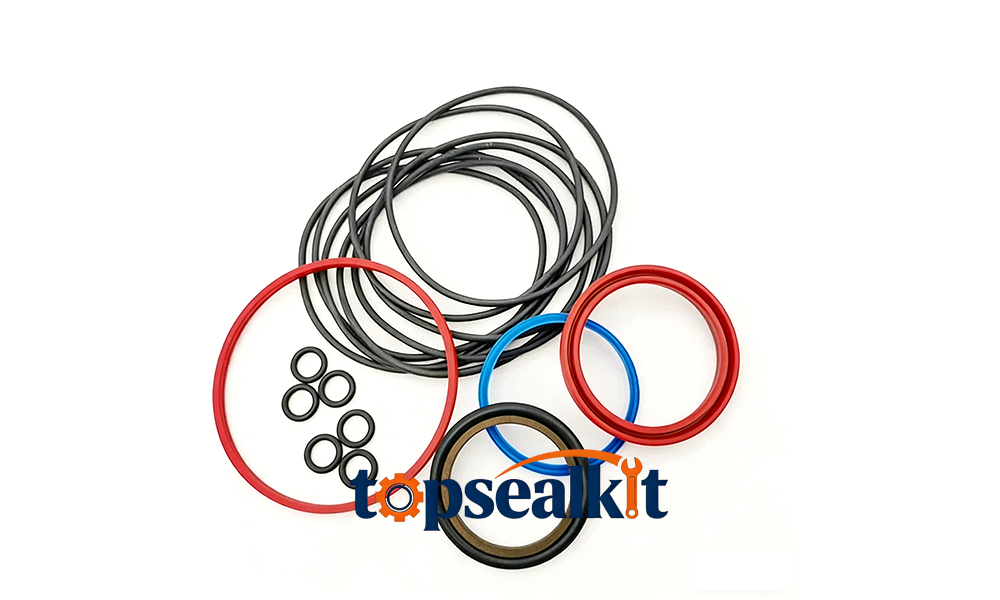
For excavator applications, high-quality excavator seal kits are manufactured to precise durometer specifications that balance durability with sealing performance.
Common Durometer Scales for Hydraulic Seals
Shore A Scale (Most Common)
The Shore A durometer scale measures softer elastomers on a 0-100 scale. Most hydraulic seal materials fall within specific ranges on this scale:
- 70-80 Shore A: Soft elastomers — rarely used for hydraulic seals
- 80-90 Shore A: Standard hydraulic seal range — common for NBR O-rings and seals
- 90-95 Shore A: Heavy-duty seal range — preferred for polyurethane rod seals in excavators
- 95+ Shore A: Very hard materials — specialty applications only
Shore D Scale
The Shore D durometer measures harder materials like PTFE, filled polymers, and rigid plastics:
- 40-60 Shore D: PTFE and filled PTFE seal materials
- 60-80 Shore D: Hard polymer backup rings and wear rings
Durometer Requirements for Excavator Seal Components
Polyurethane (PU) Rod Seals
PU rod seals for excavators typically require 90-95 Shore A durometer:
- 90 Shore A: Standard PU — excellent balance of sealing and durability
- 92-93 Shore A: Heavy-duty PU — preferred for high-pressure applications
- 94-95 Shore A: Premium PU — maximum abrasion resistance for mining applications
The CAT 308D CR SB Oil Seal Kit uses premium PU seals at the optimal hardness level for excavator applications.
Nitrile Rubber (NBR) O-Rings
NBR O-rings for hydraulic systems typically require 70-80 Shore A durometer:
- 70 Shore A: Standard NBR — adequate for most static seal applications
- 75 Shore A: Common specification for hydraulic O-rings
- 80 Shore A: Higher hardness NBR for high-pressure static seals
Viton (FKM) Seals
Viton/FKM seals typically measure 75-85 Shore A due to the fluorocarbon compound’s inherent hardness:
- 75 Shore A: Standard FKM — excellent for high-temperature applications
- 80-85 Shore A: High-performance FKM compounds for extreme conditions
PTFE Piston Seals and Backup Rings
PTFE materials are measured on the Shore D scale:
- 50-55 Shore D: Virgin PTFE — excellent chemical resistance but lower mechanical strength
- 60-65 Shore D: Filled PTFE (glass, carbon, graphite filled) — enhanced mechanical properties
- 65-75 Shore D: Bronze-filled PTFE — maximum load-bearing capacity for heavy-duty applications
How Durometer Affects Excavator Seal Performance
Hardness and Wear Resistance
Harder seal materials (higher Shore A ratings) generally provide better abrasion resistance. In excavator applications where contamination is inevitable, this means longer seal life:
- 90 Shore A PU: Standard wear resistance — 4,000-6,000 hour service life
- 93 Shore A PU: Enhanced wear resistance — 5,000-7,000 hour service life
- 95 Shore A PU: Maximum wear resistance — 6,000-9,000 hour service life in harsh conditions
Hardness and Sealing Ability
Paradoxically, there is an optimal hardness range for sealing. Seals that are too soft may extrude under pressure; seals that are too hard may not conform to microscopic surface variations on the rod or bore:
- Too soft (75-80 Shore A PU): Risk of extrusion at high pressure, faster compression set
- Optimal (88-93 Shore A PU): Best balance of sealing, wear resistance, and pressure resistance
- Too hard (95+ Shore A PU): May not conform to imperfect sealing surfaces, leading to micro-leakage
Hardness and Temperature Stability
Durometer ratings are measured at room temperature (23C). At elevated temperatures, all elastomers become softer:
- NBR: Loses approximately 10-15 Shore A points at 100C operating temperature
- PU: Maintains hardness better but degrades above 100C
- FKM: Most temperature-stable elastomer — minimal hardness change at high temperatures
Selecting the Right Durometer for Your Application
Match durometer ratings to your specific operating conditions:
Standard Construction Applications
For excavators in general construction with regular maintenance:
- Rod seals: 90-93 Shore A PU
- Wiper seals: 90-93 Shore A PU
- Piston seals: PTFE or 88-90 Shore A PU
- O-rings: 70-75 Shore A NBR
Mining and Heavy-Duty Applications
For excavators in mining, quarrying, and demolition:
- Rod seals: 93-95 Shore A PU (premium grade)
- Wiper seals: 93-95 Shore A PU with metal reinforcement
- Piston seals: Filled PTFE (carbon or graphite filled)
- O-rings: 75-80 Shore A NBR or FKM for high-temperature areas
High-Temperature Applications
For excavators operating in desert conditions or near heat sources:
- Rod seals: FKM (Viton) 80-85 Shore A
- Wiper seals: 93 Shore A PU (heat-stabilized grade)
- Piston seals: High-performance filled PTFE
- O-rings: FKM 75-80 Shore A
Verifying Seal Quality: Durometer Testing
Quality seal manufacturers verify durometer ratings through batch testing. Look for suppliers who provide material test reports including:
- Hardness test results (Shore A or Shore D as appropriate)
- Tensile strength and elongation measurements
- Compression set test results
- Temperature range specifications
Conclusion
Understanding oil seal durometer hardness ratings helps you select the right components for your excavator hydraulic system. Match durometer ratings to your operating conditions — 90-93 Shore A PU for standard applications, 93-95 Shore A PU for heavy-duty conditions, and FKM or PTFE for high-temperature requirements.
Quality hydraulic cylinder seal kits are manufactured to precise durometer specifications. Verify that your supplier provides material test reports confirming hardness ratings for every batch of seals.
Browse our complete range of excavator parts — all seals manufactured to OEM-equivalent durometer specifications with full quality certification.
Keywords: oil seal durometer, Shore A hardness, excavator seal hardness, hydraulic seal material grades, PU seal hardness rating, NBR O-ring durometer