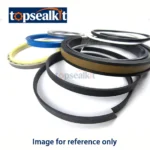

When ordering excavator cylinder seal kits, many equipment owners are surprised to learn that boom cylinders and arm cylinders often require different seal kits — even on the same machine. Understanding these differences helps you order the correct parts and avoid costly installation delays.
This guide explains the key differences between boom cylinder seal kits and arm cylinder seal kits for excavators, with practical advice for ordering and installation.
Why Boom and Arm Cylinders Need Different Seal Kits
Excavator hydraulic cylinders are not identical. Each cylinder type has unique dimensions, pressure ratings, and duty cycles that require specifically matched seals:
Boom Cylinder Characteristics
- Largest bore diameter: Boom cylinders typically have the largest bore and rod diameter on the excavator
- Highest load capacity: Must support the entire weight of the boom, arm, and attachment
- Lower cycling frequency: Boom position changes less frequently than arm or bucket positions
- Maximum pressure exposure: Often operates at maximum system pressure during heavy lifts
Arm (Stick) Cylinder Characteristics
- Medium bore diameter: Smaller than boom cylinder, larger than bucket cylinder
- High cycling frequency: Arm cylinder cycles constantly during digging operations
- Variable pressure loading: Pressure varies widely depending on digging depth and resistance
- Side loading: Arm cylinders experience more side loading during digging than boom cylinders
These differences mean that excavator seal kits must be ordered by specific cylinder type — not just by machine model.
Dimensional Differences: Why Size Matters
The most obvious difference between boom and arm cylinder seal kits is size:
Typical CAT 320 Excavator Cylinder Dimensions
- Boom cylinder: 130mm bore x 90mm rod x 1,400mm stroke
- Arm cylinder: 140mm bore x 95mm rod x 1,600mm stroke
- Bucket cylinder: 120mm bore x 80mm rod x 1,100mm stroke
Notice that the arm cylinder actually has a larger bore than the boom cylinder on many models — a counter-intuitive fact that trips up many parts buyers. Always verify exact dimensions before ordering.
Seal Size Implications
These dimensional differences mean:
- Different seal diameters: Rod seals, piston seals, and wiper seals are different sizes
- Different O-ring sizes: Static seals throughout the cylinder are dimension-specific
- Different backup ring sizes: Anti-extrusion rings must match bore and rod dimensions
- Different guide ring sizes: Wear rings are bore and rod diameter specific
Pressure and Duty Cycle Considerations
Boom Cylinder Pressure Loading
Boom cylinders experience the highest static loads on the excavator:
- Static holding pressure: Must maintain boom position under load continuously
- Maximum pressure cycles: Often sees maximum relief valve pressure during heavy lifts
- Seal requirements: High compression set resistance and extrusion resistance critical
Arm Cylinder Pressure Loading
Arm cylinders experience the most dynamic loading:
- High cycling rate: May cycle 500-1,000 times per operating day
- Variable pressure: Pressure ranges from near-zero to maximum repeatedly
- Side loading: Digging forces create lateral loads on the rod and seals
- Seal requirements: Excellent dynamic sealing and abrasion resistance critical
The CAT 308D CR SB Oil Seal Kit is available in separate configurations for boom, arm, and bucket cylinders — each optimized for the specific demands of that cylinder type.
Common Ordering Mistakes
Mistake 1: Ordering “One Kit Fits All”
Some aftermarket suppliers offer generic “CAT 320 seal kits” without specifying cylinder type. These one-size-fits-all kits rarely fit correctly and often result in leaks or rapid failure. Always order cylinder-specific kits.
Mistake 2: Assuming Boom = Largest
On many excavator models, the arm cylinder actually has a larger bore than the boom cylinder. Assuming the boom cylinder is always the largest can lead to ordering the wrong kit.
Mistake 3: Mixing Cylinder Types
Installing arm cylinder seals in a boom cylinder (or vice versa) results in immediate leaks or rapid failure. The seals may look similar but have critical dimensional differences.
Mistake 4: Not Specifying Cylinder Type
When ordering from a parts supplier, always specify:
- Machine model and serial number
- Cylinder type (boom, arm, bucket, blade, etc.)
- OEM part number if available
- Operating conditions (standard or heavy-duty)
How to Identify Your Cylinder Type When Ordering
If you are unsure which cylinder you are servicing:
- Visual inspection: The boom cylinder connects the upper structure to the boom; the arm cylinder connects the boom to the arm (stick)
- Parts manual reference: The machine parts catalog lists each cylinder separately with distinct part numbers
- Measurement: Measure bore and rod diameter with calipers — match to specifications in the service manual
- Old seal reference: If removing old seals, check for part numbers molded or stamped into the seal material
Complete Cylinder Seal Kit Contents by Type
Both boom and arm cylinder seal kits contain the same types of components — just in different sizes:
- Wiper seal (dust seal)
- Rod seal (main pressure seal)
- Buffer seal (pressure stabilizer)
- Gland O-ring (static seal)
- Piston seal (bore seal)
- Piston backup ring (anti-extrusion)
- Piston O-ring (static seal)
- Guide rings / wear rings (2x)
The difference is in the dimensions — each component is sized specifically for the bore diameter, rod diameter, and groove dimensions of that particular cylinder.
Pricing Differences: Boom vs Arm Cylinder Kits
Seal kit pricing generally correlates with cylinder size:
- Large bore cylinders: Higher cost due to more material and larger seal sizes
- Small bore cylinders: Lower cost but same component count
- Complexity factor: Some cylinder designs require more complex seal geometries
Expect boom cylinder seal kits to cost 10-30% more than bucket cylinder kits for the same machine, with arm cylinder kits typically in the middle price range.
Conclusion
Understanding the differences between boom cylinder seal kits and arm cylinder seal kits is essential for ordering the correct parts and achieving reliable hydraulic performance. Always specify the exact cylinder type when ordering, verify dimensions if uncertain, and use complete hydraulic cylinder seal kits matched to your specific application.
Shop our complete range of excavator parts with cylinder-specific seal kits for all major brands and models.
Keywords: boom cylinder seal kit, arm cylinder seal kit, excavator cylinder seals, boom vs arm cylinder, hydraulic cylinder seal differences, CAT excavator seal kit