Hydraulic seal technology is advancing rapidly in 2026, with new materials, designs, and manufacturing processes delivering significant improvements in seal performance, longevity, and reliability. For excavator operators and fleet managers, staying current with these innovations translates directly into reduced downtime, lower maintenance costs, and improved equipment ROI.
The Evolution of Hydraulic Seal Materials
Next-Generation Polyurethane Compounds
Traditional polyurethane seals have served excavator hydraulics well for decades. But 2026 brings next-generation PU compounds with dramatically enhanced properties:
- Improved abrasion resistance: New polymer formulations provide 40-60% better wear resistance than standard PU, extending seal life in contaminated environments
- Enhanced hydrolysis resistance: Premium PU grades now withstand water contamination and ester-based fluids that degraded earlier formulations
- Wider temperature range: Advanced PU compounds maintain performance from -40C to +120C, suitable for extreme climate operations
- Better compression set resistance: Improved memory properties mean seals maintain contact pressure longer
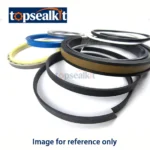
Quality excavator seal kits now incorporate these advanced PU formulations as standard.
FKM Evolution: High-Performance Fluoroelastomers
FKM (Viton) seal technology has evolved significantly:
- New FKM grades: Advanced fluoroelastomer compounds offer improved low-temperature flexibility (-30C operation) while maintaining high-temperature performance to +220C
- Specialty FKM compounds: New formulations compatible with phosphate ester and synthetic ester hydraulic fluids used in environmentally sensitive applications
- Improved processing: Advanced molding techniques produce FKM seals with tighter dimensional tolerances and better surface finish
PTFE Nanocomposites
PTFE seal technology advances are driven by nanotechnology:
- Nanofiller reinforcement: Adding carbon nanotubes or graphene at low concentrations dramatically improves mechanical properties
- Reduced friction: Nanocomposite PTFE shows 20-30% lower friction coefficients than conventional filled PTFE
- Enhanced wear resistance: Nanocomposite seals last 50-100% longer in high-cycling applications
Smart Seals: The Integration of Sensors
The most significant innovation in hydraulic sealing is the integration of sensors into seal components:
Condition Monitoring Seals
Embedded sensor technology in seal components provides real-time monitoring:
- Temperature sensors: Detect overheating conditions before seal failure occurs
- Pressure indicators: Alert operators when system pressure deviates from specifications
- Wear indicators: Visual or electronic signals when seals approach replacement interval
RFID-Enabled Seals
Radio-frequency identification (RFID) tags embedded in seals enable:
- Automatic identification of seal type and specifications during maintenance
- Tracking of seal installation date and operating hours
- Verification of authentic replacement parts
- Integration with fleet management software for predictive maintenance
3D Printing and Custom Seal Manufacturing
Additive manufacturing is transforming seal production:
- Rapid prototyping: New seal designs can be tested and refined in days rather than weeks
- Custom geometries: Complex seal shapes impossible to manufacture with traditional methods can now be produced
- Small-batch production: Economic production of custom seals for rare or obsolete equipment
- On-demand manufacturing: Seals can be produced as needed rather than held in inventory
Surface Engineering Advances
Surface treatment technologies improve seal performance:
Rod Surface Coatings
Advanced rod surface technologies reduce seal wear:
- Hard chrome alternatives: Thermal spray coatings (WC-Co, Cr3C2-NiCr) provide equivalent wear resistance without environmental concerns
- DLC coatings: Diamond-like carbon coatings offer exceptional hardness and low friction
- Laser texturing: Precisely engineered surface patterns improve lubricant retention and reduce wear
Seal Lip Modifications
Advanced seal lip geometries improve sealing performance:
- Multi-lip designs: Progressive sealing lips for better contamination exclusion
- Variable lip geometries: Optimized lip shapes for specific pressure and speed conditions
- Integrated dust exclusion: Combined wiper/rod seal designs reducing component count
Sustainability-Driven Innovation
Environmental requirements are driving new seal technologies:
Biodegradable Hydraulic Fluids and Compatible Seals
As biodegradable hydraulic fluids (vegetable oil-based, PAG-based) gain adoption, seals compatible with these fluids are essential:
- Specialized NBR compounds with improved vegetable oil resistance
- EPDM seals for water-glycol and phosphate ester fluids
- PTFE seals providing universal compatibility with all fluid types
Recycled and Bio-Based Materials
Sustainability initiatives drive material innovation:
- Recycled PTFE from industrial scrap
- Bio-based polyurethane from castor oil and other renewable sources
- Recycled carbon fiber in backing ring compounds
Manufacturing Technology Advances
Production technology improvements enhance seal quality:
- Injection molding precision: Microprocessor-controlled injection molding produces seals with tolerances under 0.01mm
- Clean room manufacturing: Seals produced in controlled environments eliminate contamination-related defects
- Automated visual inspection: AI-powered inspection systems detect defects invisible to human inspectors
- Blockchain quality tracking: Complete production history recorded for every seal batch
Conclusion
Hydraulic seal technology in 2026 offers excavator operators unprecedented performance options. From next-generation PU compounds to smart sensor-enabled seals, the technology available today would have been impossible a decade ago.
Staying current with these innovations — and sourcing quality seal kits that incorporate the latest materials and designs — is one of the most effective ways to reduce maintenance costs and extend equipment life.
Browse our complete range of advanced hydraulic sealing solutions for excavators of all brands and models.
Keywords: hydraulic seal technology innovation 2026, excavator seal materials, smart hydraulic seals, PTFE nanocomposite, sustainable seal technology