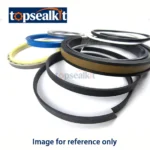

Choosing the correct oil seal kit for your excavator is one of the most important purchasing decisions you will make as an equipment owner or fleet manager. The right seal kit keeps your hydraulic system running at peak efficiency, while the wrong one can cause leaks, contamination, and costly downtime within days of installation.
With hundreds of excavator models from dozens of manufacturers — each with unique cylinder dimensions and seal specifications — selecting the right kit can feel overwhelming. This comprehensive guide breaks down everything you need to know to make the right choice every time.
Why the Right Oil Seal Kit Matters
Excavator hydraulic systems operate at pressures between 3,000 and 5,000 PSI. At these extreme pressures, the seal is the only barrier preventing high-pressure hydraulic fluid from escaping past the piston rod. A seal that is even slightly oversized, undersized, or made from the wrong material will fail — often within the first few hours of operation.
Using the correct excavator seal kit is not just about preventing leaks. It is about protecting your entire hydraulic investment: pumps, motors, valves, and cylinders all depend on clean, pressurized hydraulic fluid to function.
Step 1: Identify Your Excavator Model Exactly
The foundation of correct seal kit selection is knowing your exact machine model. This means more than just “CAT 308” — you need the full designation:
- Brand: Caterpillar, Komatsu, Hitachi, Hyundai, Kobelco, Volvo, Doosan, JCB, Liebherr
- Series: 308D CR SB, PC200-8MO, ZX210LC-6, R220-9S, SK210LC-10
- Serial number range: OEM parts can have design changes between serial number ranges
For example, our CAT 308D CR SB Oil Seal Kit (Part No. 4157469) is specifically engineered for that exact model designation — not just any CAT 308.
Step 2: Identify the Cylinder Type
Excavators have multiple hydraulic cylinders, each with different bore sizes, rod diameters, and stroke lengths. Common cylinders requiring seal kits:
- Boom cylinder: Raises and lowers the main boom. Usually the largest cylinder on the machine.
- Arm (stick) cylinder: Controls the digging arm. Medium-sized cylinder.
- Bucket cylinder: Opens and closes the bucket. Often smaller than boom and arm cylinders.
- Blade cylinder: Controls the dozer blade on crawler excavators. May require a different kit.
- Tilt coupler cylinder: Operates hydraulic quick couplers and tilt attachments.
Each cylinder type typically requires a different seal kit, even on the same machine. Always confirm the cylinder you are servicing before ordering.
Step 3: Find the OEM Part Number
The OEM part number is the most reliable way to identify the correct seal kit. You can find it in several ways:
- On the old seal: Part numbers are often stamped or molded into the seal itself
- In the parts manual: The machine parts catalog lists all seal kit part numbers
- On the machine serial plate: Sometimes listed with the original specification
- From your dealer: They can cross-reference your serial number to find the correct part
Step 4: Choose the Right Seal Material
Different operating conditions require different seal materials:
Polyurethane (PU): The most common material for excavator rod seals and wiper seals. Excellent abrasion resistance, high load capacity, and good extrusion resistance. Ideal for standard construction applications. Temperature range: -30C to +100C.
Nitrile Rubber (NBR): Standard material for O-rings and static seals throughout the hydraulic system. Excellent compatibility with petroleum-based hydraulic oils. Cost-effective and widely available. Temperature range: -40C to +120C.
Viton/FKM: Premium material for high-temperature applications, synthetic hydraulic fluids, and chemically aggressive environments. Superior resistance to heat, ozone, and weathering. Required for equipment operating in hot climates or with phosphate ester-based fluids. Temperature range: -20C to +200C.
PTFE: Used for piston seals and guide rings where low friction and wide fluid compatibility are required. Virtually impervious to chemical attack. Excellent for specialist applications.
Step 5: Verify Quality Before Purchasing
Not all aftermarket seal kits meet the same quality standards. Before purchasing, verify:
- Material certifications: Reputable suppliers provide material test reports for PU hardness, tensile strength, and elongation
- Dimensional tolerances: Seals must match OEM dimensions within +/- 0.1mm
- Warranty coverage: A quality supplier backs their products with at least a 12-month warranty
- Customer reviews: Real-world feedback from other equipment operators
Common Seal Kit Selection Mistakes to Avoid
Mistake 1: Buying by price alone. The cheapest seal kit is rarely the best value. Budget seals often use inferior materials that fail prematurely, costing more in repeat repairs than the initial savings.
Mistake 2: Assuming “close enough” is good enough. A seal that is 1mm off in any dimension can cause leaks or premature failure. Always verify exact dimensional match.
Mistake 3: Ignoring the application. Standard NBR seals in a high-temperature application will fail quickly. Match the material to the conditions.
Mistake 4: Not replacing all seals at once. When you have the cylinder apart, replace all seals — wiper, rod, piston, and O-rings. Replacing only the obviously failed seal usually means returning for the others within weeks.
Building a Seal Kit Inventory for Your Fleet
For fleet managers, having the right seal kits in stock means you can complete repairs during scheduled maintenance windows instead of waiting for parts to arrive. Identify your highest-utilization machines and keep their seal kits in inventory. This proactive approach dramatically reduces emergency repair situations.
Conclusion
Selecting the right oil seal kit for your excavator requires attention to detail: exact model identification, cylinder type confirmation, OEM part number verification, and material selection based on operating conditions. Follow the steps in this guide, and you will always order the correct kit — reducing downtime, cutting costs, and keeping your equipment running longer.
Browse our complete range of excavator oil seal kits for all major brands, with exact OEM matching and premium quality guaranteed.
Keywords: excavator oil seal kit selection, hydraulic seal kit buyer guide, how to choose seal kit, excavator repair parts, CAT seal kit, Komatsu seal kit