
Every hydraulic cylinder on an excavator depends on three types of seals working together: wiper seals, rod seals, and piston seals. Understanding the unique function of each seal type helps you make better maintenance decisions, choose the right replacement parts, and diagnose problems more accurately.
When any one of these seals fails, the entire hydraulic circuit is compromised. A complete excavator seal kit replaces all three seal types simultaneously, giving your cylinder a new lease on life.
Wiper Seals: The First Line of Defense
Wiper seals (also called dust seals or scraper seals) are installed at the outer end of the hydraulic cylinder gland, where the piston rod exits the cylinder housing. Their job is deceptively simple: scrape dirt, mud, sand, and water off the rod as it retracts into the cylinder.
Without a functioning wiper seal, contaminants would be dragged past the rod seal and into the cylinder’s internal environment, causing accelerated wear throughout the hydraulic circuit.
Key characteristics of excavator wiper seals:
- Material: Typically polyurethane (PU) for its excellent abrasion resistance and memory properties
- Design: Usually a single-lip or double-lip design with a metal or elastomer housing
- Temperature range: PU wiper seals operate from -30C to +100C
Signs of wiper seal failure: Mud and dirt accumulation around the rod entrance, oil spray patterns on the machine body, and eventually rod seal failure from contamination.
Rod Seals: Containing High-Pressure Hydraulic Fluid
Rod seals are the primary pressure seal in a hydraulic cylinder. Located just behind the wiper seal inside the gland, rod seals prevent hydraulic fluid from leaking past the piston rod under high pressure.
For CAT, Komatsu, Hitachi, and other major brands, rod seal dimensions are precision-matched to the gland bore and rod diameter. Always use model-specific hydraulic cylinder seal kits rather than generic alternatives to ensure correct dimensional fit.
Signs of rod seal failure: Visible hydraulic oil weeping from the rod, oil accumulation on the machine frame or ground beneath the cylinder, reduced cylinder force, and increased fluid consumption.
Piston Seals: Managing Pressure Zones Inside the Cylinder
Piston seals are installed in grooves on the piston itself, inside the cylinder bore. Their function is fundamentally different from rod seals: they separate the pressure zones on each side of the piston, enabling the cylinder to create movement in both directions.
Signs of piston seal failure: Cylinder drift (slow, unintended movement when under load), sluggish cylinder response, reduced lift capacity, and cross-port leakage.
The Complete Hydraulic Cylinder Seal Kit
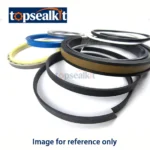
A quality excavator hydraulic cylinder seal kit contains all the seals needed to fully rebuild one cylinder end:
- 1 x Wiper seal: Dust contamination protection
- 1 x Rod seal: Primary pressure seal on the rod side
- 1 x Buffer seal (if applicable): Absorbs pressure spikes and protects the rod seal
- 1 x Piston seal: Pressure zone separation
- 1 x Piston seal backup ring: Prevents extrusion of the piston seal
- 1 x O-ring (gland seal): Static seal between gland and cylinder body
- 2 x Guide rings / wear rings: Keep the piston centered in the bore
For example, our CAT 308D CR SB Oil Seal Kit (Part No. 4157469) is a complete kit containing all these components for boom, stick, bucket, and blade cylinders.
Installing Seal Kits: Best Practices
- Clean everything: Clean the cylinder bore, piston, and gland thoroughly before installing any seals.
- Inspect the bore and rod: Check for scoring, pitting, or chrome damage. A damaged rod surface will destroy new seals within hours.
- Lubricate everything: Apply clean hydraulic fluid to all seals and sealing surfaces before assembly.
- Use the right tools: Seal installation tools protect seal lips during assembly.
- Protect rod threads: Cover any threads or sharp edges on the rod before sliding seals over them.
Conclusion
Understanding the distinct roles of wiper seals, rod seals, and piston seals is essential for anyone responsible for excavator maintenance. The smart maintenance strategy is to replace all seals together with a complete hydraulic cylinder seal kit whenever you open a cylinder for service.
Keywords: excavator wiper seal, rod seal, piston seal, hydraulic cylinder seal types, seal kit installation, hydraulic seal materials