When most equipment owners think about hydraulic cylinder seals, they focus on rod seals, piston seals, and wiper seals. But there is another category of components that is equally critical for seal longevity: guide rings and wear rings. These components are often overlooked — but their failure is one of the most common causes of rapid seal wear in excavator hydraulic cylinders.
What Are Guide Rings and Wear Rings?
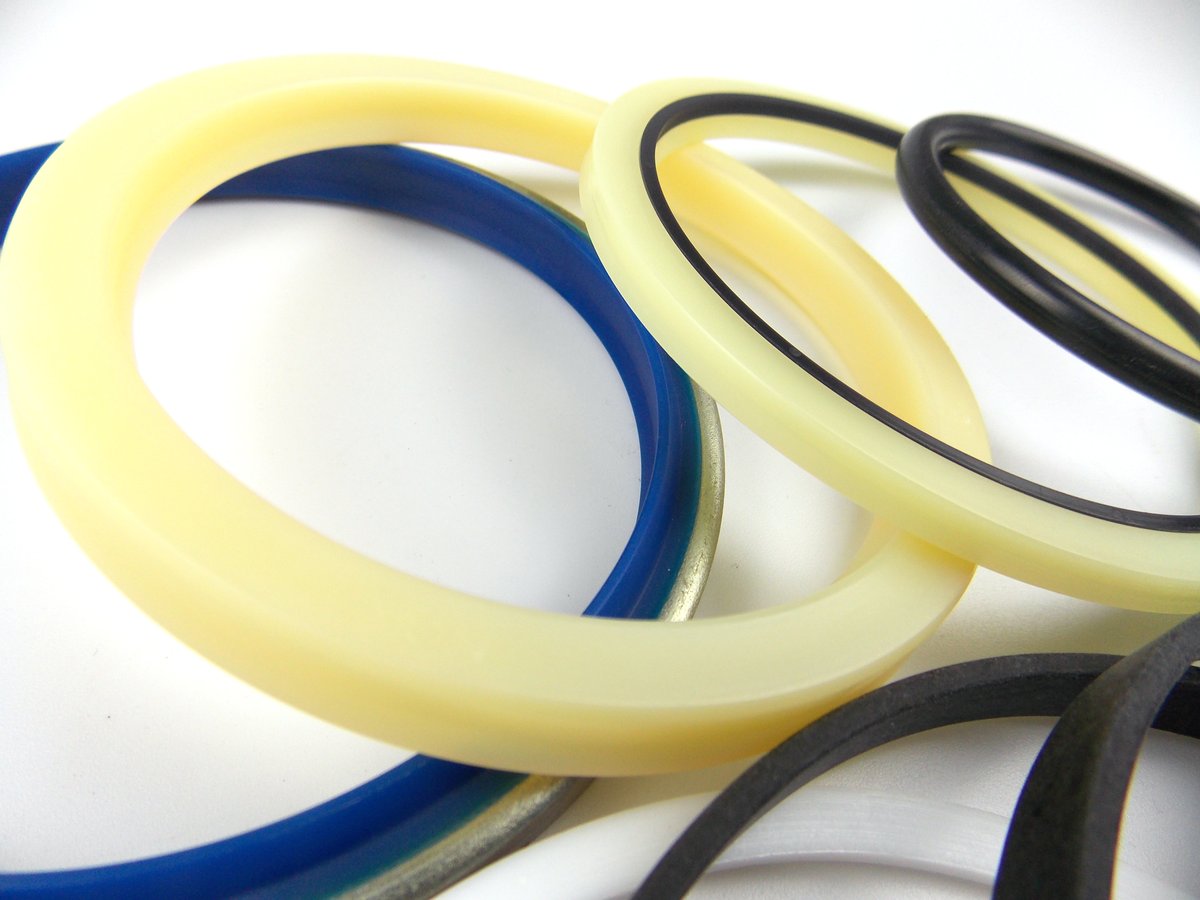
Guide rings (also called wear rings, bearing rings, or guide bearings) are non-sealing components installed in the cylinder gland and on the piston. Unlike seals, they do not prevent fluid leakage. Instead, they perform a mechanical support function: keeping the piston rod and piston centered within the cylinder bore.
Types of Guide Rings in Excavator Cylinders
Rod Guide Rings
Installed in the cylinder gland, rod guide rings support the piston rod and prevent it from contacting the gland bore. They absorb the radial (side) loads that would otherwise be transmitted directly to the rod seal.
Piston Guide Rings
Installed on the piston, piston guide rings keep the piston centered in the cylinder bore. They prevent the piston from contacting the bore wall and absorb the radial loads that would otherwise damage the piston seal.
Why Guide Rings Are Critical for Seal Life
Excavator hydraulic cylinders experience significant radial (side) loads during operation. When the bucket digs into hard material, when the machine swings with a load, or when the boom lifts at an angle, the piston rod is subjected to bending forces that try to push it sideways within the cylinder.
Without guide rings, these radial loads would be absorbed by the seals themselves. Rod seals and piston seals are designed to seal against axial pressure — they are not designed to support radial loads. When seals are forced to carry radial loads, they wear unevenly and fail rapidly.
Guide rings absorb these radial loads, keeping the rod and piston centered and allowing the seals to do their intended job: sealing against hydraulic pressure.
Guide Ring Materials
Guide rings must be hard enough to support radial loads without deforming, yet soft enough not to damage the rod or bore surfaces they contact:
- Virgin PTFE: Excellent chemical resistance and low friction. Suitable for light to moderate radial loads.
- Glass-filled PTFE: Enhanced mechanical strength and wear resistance. Most common for standard excavator applications.
- Carbon-filled PTFE: Improved thermal conductivity and wear resistance. Good for high-speed applications.
- Bronze-filled PTFE: Maximum load-bearing capacity. Preferred for heavy-duty mining and quarry applications.
- Phenolic resin: Very high load capacity. Used in some heavy-duty cylinder designs.
Signs of Guide Ring Failure
Guide ring failure is often misdiagnosed as seal failure because the symptoms are similar:
- Rapid seal wear: New seals failing within 500-1,000 hours despite correct installation
- Uneven seal wear patterns: Seals worn more on one side than the other
- Metallic contact sounds: Knocking or scraping from the cylinder during operation
- Visible scoring on rod or bore: Metal-to-metal contact from failed guide rings
- Excessive rod play: Noticeable lateral movement of the rod in the gland
Guide Ring Replacement: Why It Cannot Be Skipped
Guide rings are wear items that must be replaced every time a cylinder is rebuilt. Reusing worn guide rings after installing new seals is one of the most common causes of premature seal failure in excavator maintenance.
Complete excavator seal kits include guide rings as standard components. The CAT 308D CR SB Oil Seal Kit includes all guide rings and wear rings needed for a complete cylinder rebuild.
Measuring Guide Ring Wear
Guide rings should be measured during cylinder inspection:
- Thickness measurement: Compare to original specification. Replace if worn beyond 20% of original thickness.
- Surface condition: Check for scoring, cracking, or embedded particles.
- Groove condition: Inspect guide ring grooves for wear or damage that would prevent new rings from seating correctly.
Conclusion
Guide rings and wear rings are the unsung protectors of your excavator’s hydraulic seals. By absorbing radial loads and keeping the rod and piston centered, they allow seals to perform their intended function without being subjected to damaging side loads. Always replace guide rings when rebuilding a cylinder — and choose complete hydraulic cylinder seal kits that include all guide ring components.
Browse our complete range of excavator parts for seal kits with all guide ring components included.
Keywords: guide ring hydraulic cylinder, wear ring excavator, bearing ring cylinder, hydraulic seal protection, excavator cylinder components