Beyond the primary rod seal and piston seal, every excavator hydraulic cylinder contains several supporting seal components that are equally important for reliable performance. Buffer seals and O-rings are two of the most critical — yet most frequently misunderstood — components in a complete hydraulic cylinder seal kit.
Buffer Seals: Protecting the Rod Seal from Pressure Spikes
A buffer seal (also called a pressure cushion seal or backup seal) is installed in the cylinder gland between the rod seal and the hydraulic fluid. Its primary function is to absorb sudden pressure spikes before they reach the rod seal.
Why Pressure Spikes Are Dangerous
Excavator hydraulic systems regularly experience pressure spikes that exceed the normal operating pressure by 20-50%. These spikes occur when:
- The bucket hits a rock or hard obstruction suddenly
- Control valves open or close rapidly
- The machine experiences sudden load changes
- Relief valves open to protect the system
Without a buffer seal, these pressure spikes hit the rod seal directly. Over thousands of cycles, the repeated impact loading fatigues the rod seal material, causing premature failure — often long before the seal would fail from normal wear alone.
How Buffer Seals Work
The buffer seal acts as a pressure accumulator between the hydraulic fluid and the rod seal. When a pressure spike occurs, the buffer seal absorbs the initial energy of the spike, smoothing the pressure wave before it reaches the rod seal. This dramatically extends rod seal life in high-cycling applications.
Buffer Seal Design
Buffer seals are typically designed as single-acting seals that allow fluid to pass in one direction (toward the rod seal) but resist pressure spikes from the other direction. Common designs include:
- U-cup buffer seals: Simple, cost-effective design for moderate pressure applications
- Step-cut buffer seals: More complex design for high-pressure applications
- Integrated buffer/rod seal combinations: Some modern designs combine both functions in a single component
Buffer Seal Materials
Buffer seals are typically manufactured from polyurethane (PU) or PTFE, depending on the pressure rating and operating conditions. Premium excavator seal kits include buffer seals matched to the specific pressure rating of each cylinder.
O-Rings: The Workhorses of Static Sealing
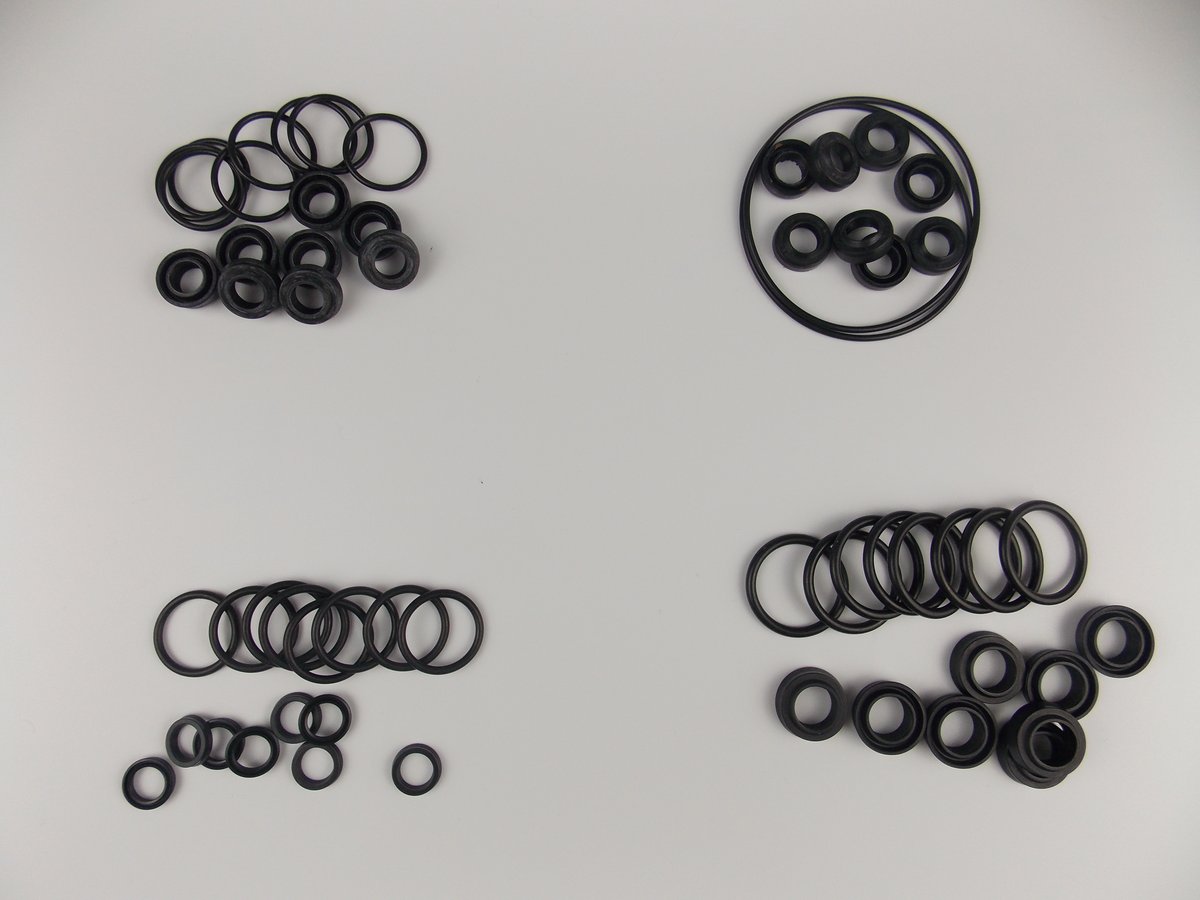
O-rings are the most widely used sealing element in hydraulic systems. In excavator hydraulic cylinders, O-rings provide static sealing at every fixed joint — points where two components connect but do not move relative to each other.
Where O-Rings Are Used in Excavator Cylinders
- Gland O-ring: Seals the joint between the cylinder gland and the cylinder body
- Piston O-ring: Seals the joint between the piston and the piston rod
- Port O-rings: Seal hydraulic hose connections at the cylinder ports
- End cap O-rings: Seal the cylinder end cap to the cylinder body
How O-Rings Work
An O-ring seals by being compressed between two surfaces. The compression creates a contact pressure that exceeds the hydraulic pressure, preventing fluid from passing. The higher the hydraulic pressure, the more the O-ring is energized against the sealing surfaces — making O-rings self-energizing seals that actually seal better at higher pressures.
O-Ring Failure Modes
O-rings fail in several characteristic ways:
- Compression set: Permanent deformation from long-term compression reduces contact pressure
- Extrusion: O-ring material squeezes into the gap between sealing surfaces under high pressure
- Chemical degradation: Incompatible fluid or high temperature degrades the elastomer
- Spiral failure: O-ring twists in its groove during installation or operation
- Nibbling: Repeated extrusion and retraction causes small pieces to break off the O-ring
O-Ring Materials for Excavator Applications
- Nitrile Rubber (NBR): Standard material for petroleum-based hydraulic oils. Temperature range -40C to +120C. Most common in excavator applications.
- Viton (FKM): For high-temperature applications or synthetic hydraulic fluids. Temperature range -20C to +200C.
- EPDM: For water-based hydraulic fluids. Not compatible with petroleum oils.
The Importance of Replacing All Seals Together
Complete hydraulic cylinder seal kits include buffer seals, O-rings, and all other sealing components for a reason. When you open a cylinder for service, every seal has experienced the same operating hours and conditions. Replacing only the obviously failed seal while leaving others in place is a false economy.
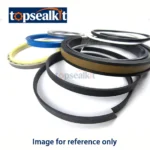
The CAT 308D CR SB Oil Seal Kit includes every sealing component needed for a complete cylinder rebuild — wiper seal, rod seal, buffer seal, piston seal, backup rings, O-rings, and guide rings.
Conclusion
Buffer seals and O-rings are essential components of every excavator hydraulic cylinder. Buffer seals protect rod seals from pressure spike damage; O-rings provide reliable static sealing at every fixed joint. Understanding their functions helps you appreciate why complete seal kit replacement — not just replacing the obviously failed component — is always the right maintenance approach.
Browse our complete range of excavator parts for complete seal kits that include every component needed for a full cylinder rebuild.
Keywords: buffer seal hydraulic cylinder, O-ring excavator, hydraulic seal types, pressure spike protection, static seal hydraulic, excavator cylinder seal kit